
Physiotherapists dedicate their lives to helping others recover from pain, injuries, and physical challenges. But while caring for patients, many physiotherapists forget about their own health. Long hours of bending, lifting, stretching, and treating patients can silently take a toll on your body. Neck pain, lower back strain, wrist fatigue, and shoulder discomfort are some of the most common occupational hazards among physiotherapists.
This is where ergonomics comes in – the science of designing work conditions to fit your body, not forcing your body to fit the work. Good ergonomics can help physiotherapists reduce fatigue, prevent musculoskeletal injuries, and stay energetic throughout the day.
Below are 7 simple and practical ergonomic tips that every physiotherapist can follow to maintain personal well-being while giving the best care to patients.
1. Maintain a Neutral Spine While Working

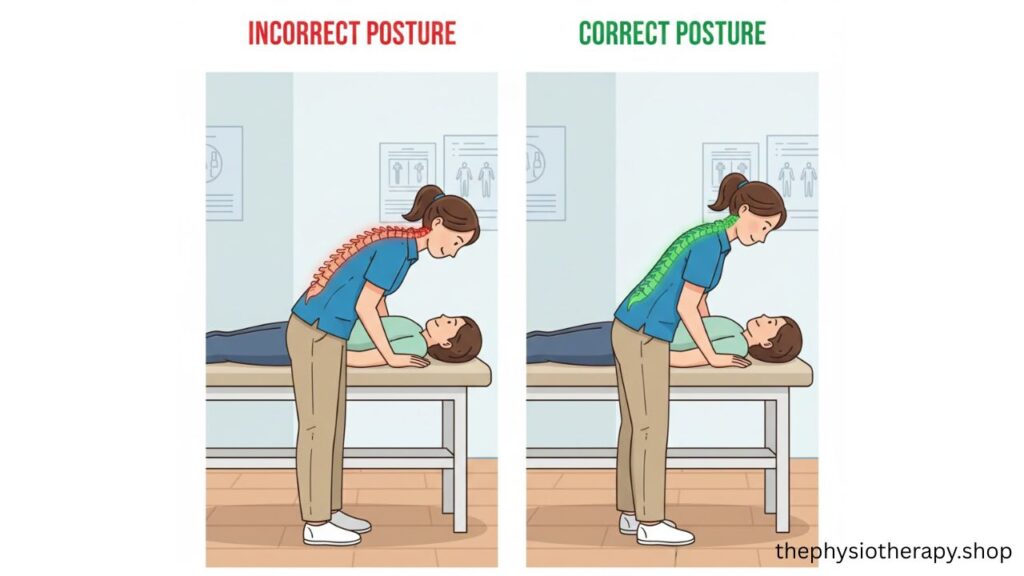
Back pain is one of the most common complaints among physiotherapists. During treatment, you often bend over patients, which puts pressure on your spine. To prevent this, always try to maintain a neutral spine posture.
Adjust the height of your treatment table so you don’t have to hunch. When reaching low, bend your knees and hinge at your hips instead of rounding your back. This simple correction can protect you from lower back pain and spinal strain.
👉 Use your body weight smartly — not forcefully. Keep your shoulders relaxed, your core engaged, and your movements controlled.
2. Protect Your Shoulders and Wrists
Manual therapy techniques such as mobilizations, massage, or stretching can put repetitive stress on your shoulders, wrists, and hands. Over time, this may lead to carpal tunnel syndrome, tendonitis, or shoulder impingement.
Use your body mechanics efficiently — apply pressure using your body weight instead of just your hands. Keep your wrists straight, avoid excessive twisting, and alternate between your hands during long sessions.
Perform gentle hand and wrist stretches between patients to maintain flexibility.
3. Set Up an Ergonomic Workstation

When you’re not treating patients, you might be documenting cases or using a computer. Poor workstation ergonomics can cause neck stiffness and eye strain.
Ensure your computer screen is at eye level and your chair supports the natural curve of your back. Keep your keyboard and mouse close to avoid reaching. An ergonomic workstation for physiotherapists not only prevents pain but also boosts productivity.
Try alternating between sitting and standing during paperwork. Using a sit-stand desk promotes better posture and blood circulation.
4. Use Safe Lifting and Handling Techniques

Transferring or supporting patients during therapy sessions is part of your daily routine. However, poor lifting habits can cause serious lower back injuries. Always bend your knees, keep your back straight, and lift with your leg muscles.
Hold patients close to your body and avoid twisting while lifting. If a patient is heavy, ask for assistance or use mechanical aids like transfer belts or hoists.
Remember: safe patient handling techniques are not just for patient safety – they’re for your safety too.
5. Schedule Mini Self-Care Breaks

Between appointments, take short self-care breaks to stretch and relax your muscles. Long hours of standing or sitting can reduce flexibility and increase fatigue.
Simple exercises like neck rolls, shoulder shrugs, and calf stretches can ease tension and prevent stiffness. Deep breathing also helps calm your mind and improve oxygen flow.
Set reminders to move every hour – even a 2-minute stretch break can make a difference over time.
6. Choose Supportive Footwear and Flooring

As a physiotherapist, you spend most of your day on your feet. Wearing unsupportive shoes or working on hard flooring can lead to knee, hip, or foot pain.
Opt for ergonomic footwear with cushioning and arch support. Use anti-fatigue mats in treatment areas to reduce strain on your legs. These small adjustments can greatly improve your comfort during long shifts.
7. Keep Your Body Fit and Flexible

Your body is your most valuable tool as a physiotherapist. Regular exercise, stretching, and posture correction routines help maintain strength, flexibility, and endurance.
Try yoga, pilates, or basic strengthening exercises for your core and back. These activities improve balance and prevent musculoskeletal injuries.
Most importantly, rest well. Your muscles and joints need time to recover – just like your patients’.
Final Thoughts
Good ergonomics isn’t just about posture – it’s about respect for your own body. As physiotherapists, you spend your days teaching others how to move better and live pain-free. But remember, you deserve the same care.
By practicing these seven ergonomic tips, you’ll reduce fatigue, prevent injuries, and stay active for years to come. Healthy therapists deliver better care – so make ergonomics your daily habit.