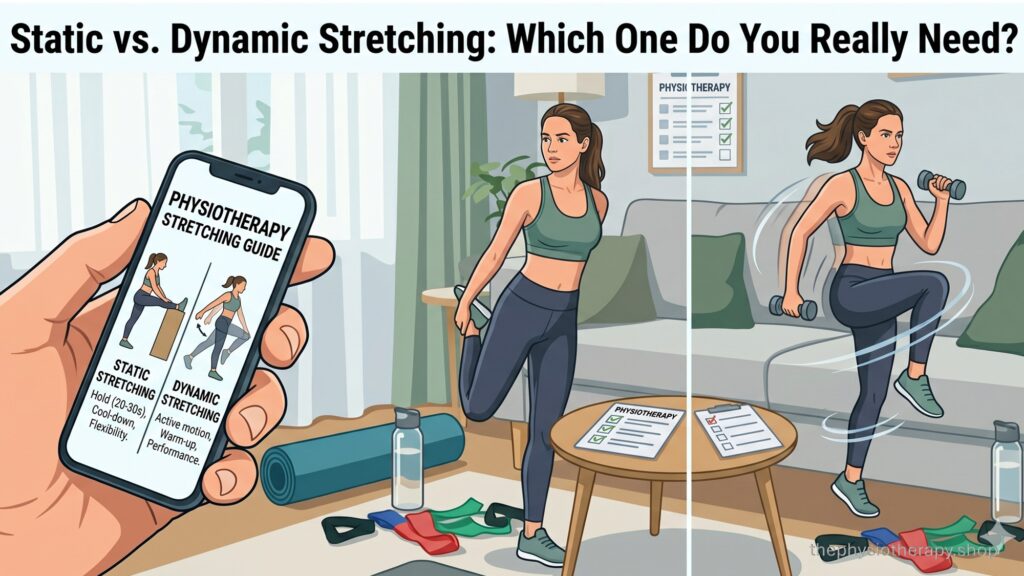
When it comes to recovery, flexibility, and performance, stretching is often prescribed—but not all stretching is created equal. The debate around static vs dynamic stretching in physiotherapy isn’t just academic; choosing the wrong type at the wrong time can slow recovery, reduce performance, or even increase injury risk.
This guide breaks down the types of stretching in rehab, compares their benefits, and helps you decide exactly what you need—whether you’re an athlete, office worker, or elderly individual.
What Is Static Stretching?
Static stretching involves holding a muscle in a stretched position for a period (typically 15–60 seconds). Think of touching your toes and holding that position.
Key Characteristics:
- Slow, controlled movement
- Held for time (not repetitive)
- Focuses on increasing flexibility
Common Uses in Physiotherapy:
- Post-exercise recovery
- Improving range of motion
- Reducing muscle tightness
What Is Dynamic Stretching?
Dynamic stretching involves controlled, active movements that take joints and muscles through their full range of motion.
Examples include leg swings, arm circles, or walking lunges.
Key Characteristics:
- Movement-based
- No holding positions
- Often mimics functional or sport-specific actions
Dynamic Stretching Benefits:
- Increases blood flow
- Activates muscles
- Improves coordination and mobility
Static vs Dynamic Stretching (Side-by-Side Comparison)
| Feature | Static Stretching | Dynamic Stretching |
|---|---|---|
| Movement Type | Passive (hold position) | Active (continuous movement) |
| Timing | After exercise | Before exercise |
| Purpose | Flexibility & relaxation | Warm-up & activation |
| Effect on Performance | May temporarily reduce power if done before activity | Enhances performance |
| Injury Prevention | Helps long-term flexibility | Reduces risk during activity |
| Best For | Recovery, rehab, elderly | Athletes, active individuals |
When Should You Use Each?
Before Exercise → Dynamic Stretching
Dynamic stretching prepares your body for movement. It increases heart rate, activates muscles, and improves joint mobility.
Example Routine (Pre-workout):
- Leg swings (10 reps each side)
- Arm circles (10 forward + backward)
- Walking lunges (10 steps)
👉 Ideal for:
- Athletes
- Gym-goers
- Anyone about to engage in physical activity
After Exercise → Static Stretching
Post-workout is the perfect time for static stretching. Muscles are warm, making it safer and more effective.
Example Routine (Post-workout):
- Hamstring stretch (30 sec hold)
- Quadriceps stretch (30 sec hold)
- Shoulder stretch (30 sec hold)
👉 Ideal for:
- Reducing soreness
- Improving flexibility
- Rehab patients
Real-Life Case Scenarios
1. The Athlete (Sprinter or Football Player)
Problem: Needs explosive power and injury prevention
Solution:
- Before: Dynamic stretching (high knees, lunges)
- After: Static stretching (hamstrings, calves)
Why? Static stretching before sprinting can reduce power output, while dynamic stretching enhances performance.
2. The Office Worker (Sedentary Lifestyle)
Problem: Tight hips, neck stiffness, poor posture
Solution:
- Morning or breaks: Light dynamic stretches (neck rolls, torso twists)
- Evening: Static stretches (hip flexors, lower back)
Why? A combination helps restore mobility and reduce stiffness from prolonged sitting.
3. The Elderly Individual
Problem: Reduced flexibility, risk of falls
Solution:
- Gentle dynamic movements (chair-assisted leg lifts)
- Static stretching for major muscle groups
Why? Improves balance, mobility, and overall functional independence.
Types of Stretching in Rehab (Beyond Static & Dynamic)
Physiotherapy often combines multiple stretching methods:
- Passive Stretching: Therapist-assisted movement
- Active Stretching: Using your own muscles to stretch
- PNF Stretching: Advanced technique involving contraction + relaxation
But for most people, static and dynamic stretching form the foundation.
Common Mistakes to Avoid
1. Static Stretching Before Intense Activity
This can reduce strength and speed temporarily.
2. Skipping Warm-Up Entirely
Jumping into exercise without dynamic stretching increases injury risk.
3. Overstretching
Pain ≠ progress. Stretch to mild tension, not discomfort.
4. Inconsistency
Stretching once a week won’t improve flexibility—consistency matters.
What Does Science Say?
Research consistently shows that:
- Dynamic stretching improves performance when done before activity
- Static stretching improves flexibility when done regularly post-exercise
- Combining both gives the best long-term outcomes
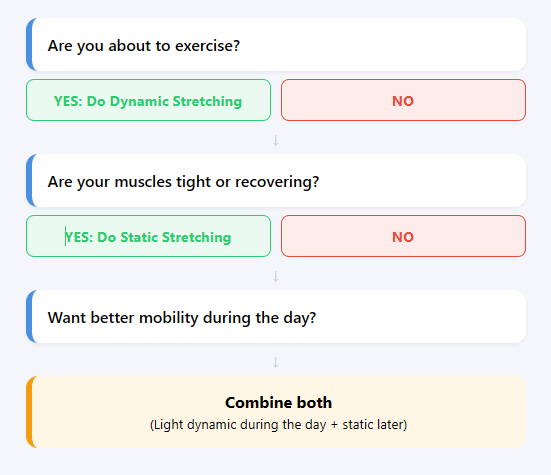
Final Verdict: Which One Do You Really Need?
The answer isn’t either-or—it’s both, used strategically.
- Choose dynamic stretching if you’re preparing for movement
- Choose static stretching if you’re recovering or improving flexibility
Simple Rule:
👉 Move before activity, hold after activity.
Takeaway Summary
- Dynamic stretching = activation + performance
- Static stretching = recovery + flexibility
- Use them at the right time for best results
- Tailor your approach based on your lifestyle (athlete, office worker, elderly)