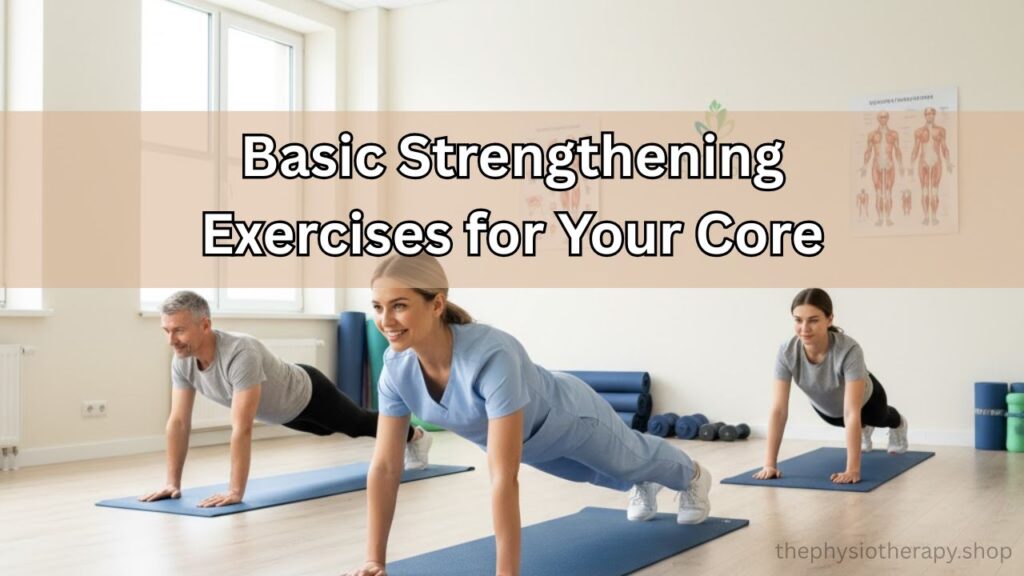
When we hear the word “core,” many people immediately think of abs or six-packs. But your core muscles are much more than that. The core includes your abdomen, back, hips, and pelvis – all working together to support your spine and help you move efficiently.
A strong core is essential for good posture, balance, and everyday activities like bending, lifting, or even standing for long hours. For physiotherapists and people with sedentary jobs alike, strengthening your core can prevent lower back pain, improve stability, and reduce fatigue.
Let’s look at some basic core strengthening exercises that you can easily include in your daily routine — no fancy gym equipment needed!
1. Plank (Front Support Hold)
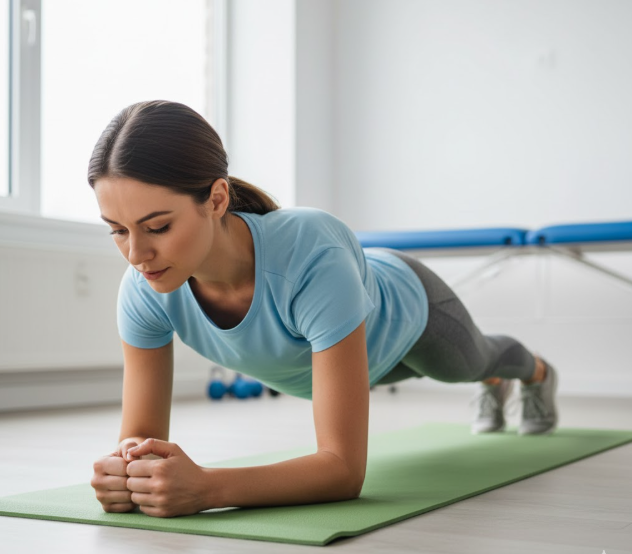
The plank is one of the most effective exercises for building endurance in your core. It engages your abdominal muscles, shoulders, and glutes at the same time.
How to do it:
- Lie face down on the floor.
- Place your forearms on the ground and elbows under your shoulders.
- Lift your body so it forms a straight line from head to heels.
- Keep your neck neutral and tighten your core.
- Hold for 20–30 seconds, gradually increasing to 1 minute.
Tip: Don’t let your hips sag or rise too high. Keep your back flat and core tight.
Benefits: Improves posture, strengthens abdominal muscles, stabilizes the spine.
2. Bridge (Glute Bridge)
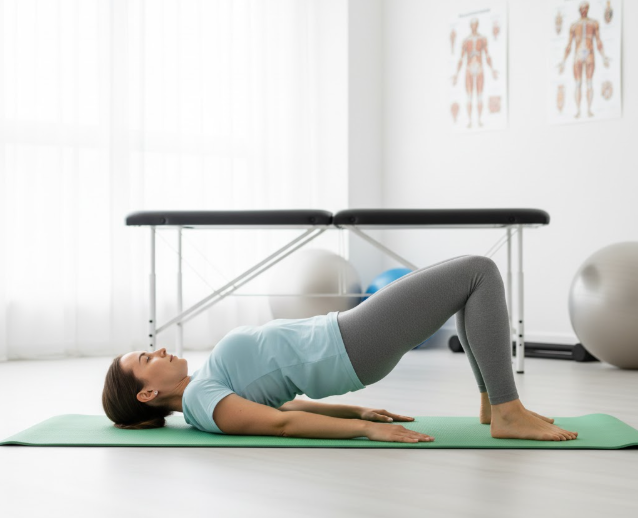
The bridge exercise strengthens your glutes, hamstrings, and lower back — muscles that support your spine and pelvis.
How to do it:
- Lie on your back with knees bent and feet flat on the floor.
- Place your arms by your sides.
- Squeeze your glutes and lift your hips off the ground until your shoulders, hips, and knees form a straight line.
- Hold for 3–5 seconds, then slowly lower back down.
- Repeat 10–15 times.
Tip: Avoid arching your back — lift with your glutes, not your lower back.
Benefits: Improves hip stability, reduces lower back strain, enhances posture.
3. Bird Dog
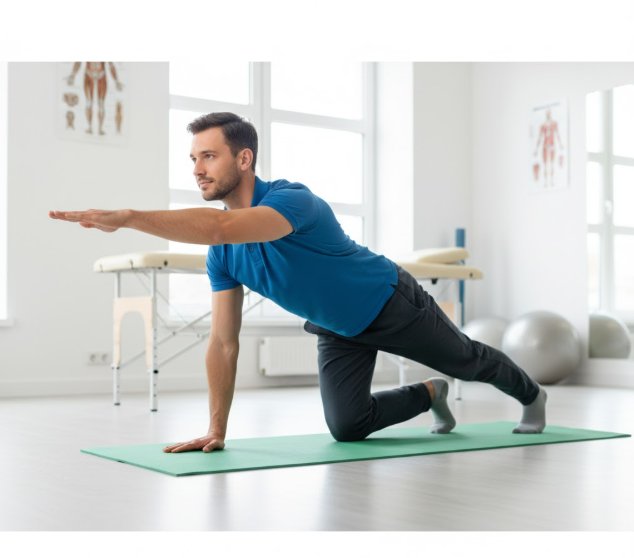
This simple but powerful movement improves balance, coordination, and spinal stability. It targets your back extensors, glutes, and abdominal muscles.
How to do it:
- Start on your hands and knees in a tabletop position.
- Keep your back flat and core tight.
- Extend your right arm forward and left leg backward at the same time.
- Hold for 3–5 seconds, then return to the starting position.
- Switch sides and repeat 10–12 times.
Tip: Don’t arch your back or tilt your pelvis. Move slowly and with control.
Benefits: Strengthens deep core muscles, enhances balance, reduces back pain.
4. Dead Bug
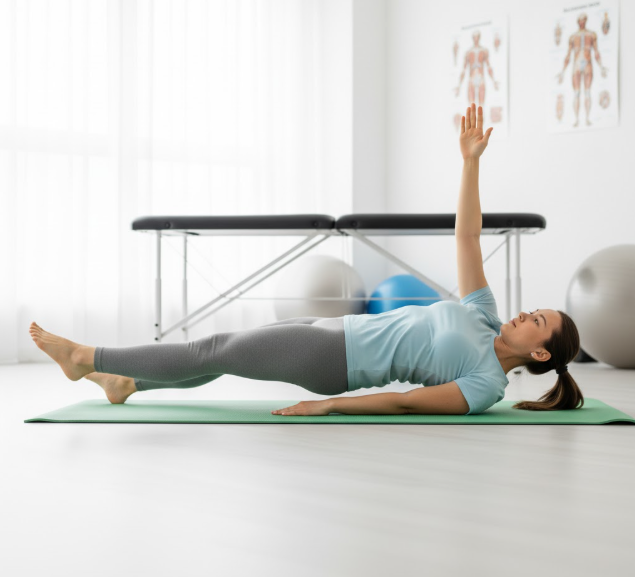
Despite its funny name, the dead bug is excellent for activating your deep abdominal muscles (transverse abdominis) — key for spinal protection.
How to do it:
- Lie flat on your back.
- Lift your legs so your knees are bent at 90°, and raise your arms toward the ceiling.
- Slowly lower your right arm and left leg toward the floor while keeping your back flat.
- Return to the starting position and repeat on the opposite side.
- Do 10–12 repetitions on each side.
Tip: Keep your lower back pressed into the mat throughout the movement.
Benefits: Improves coordination, enhances core control, reduces lower back strain.
5. Standing Side Bends
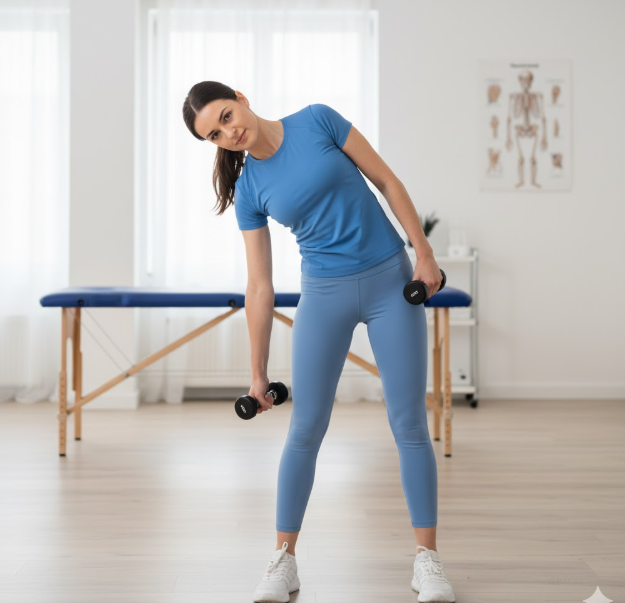
This exercise works your oblique muscles (the sides of your abdomen) which help in twisting, bending, and stabilizing your torso.
How to do it:
- Stand tall with feet shoulder-width apart.
- Hold a light dumbbell (or water bottle) in one hand.
- Slowly bend sideways toward the weight, then return to the upright position.
- Do 10–12 reps on each side.
Tip: Keep movements slow and controlled; avoid leaning forward or backward.
Benefits: Strengthens obliques, improves side flexibility, tones waistline.
6. Seated Knee Lifts
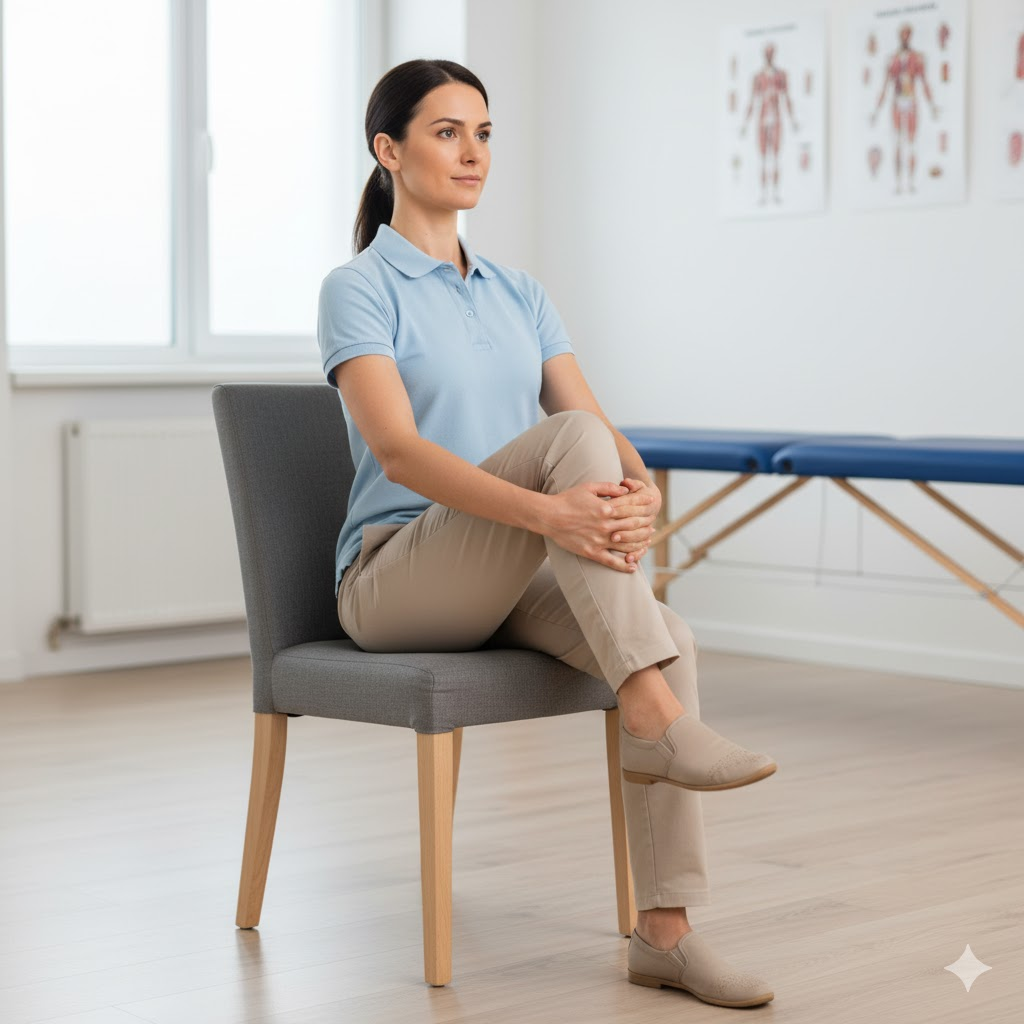
A great option for beginners or those who sit for long periods. It strengthens the lower abdominal muscles and improves posture.
How to do it:
- Sit tall on a sturdy chair, feet flat on the floor.
- Hold the sides of the chair for support.
- Slowly lift one knee toward your chest, keeping your core engaged.
- Lower and repeat with the other leg.
- Perform 10–15 repetitions per side.
Tip: Don’t lean back — stay upright to engage your core fully.
Benefits: Builds lower abdominal strength, enhances sitting posture, easy for beginners.
7. Modified Side Plank
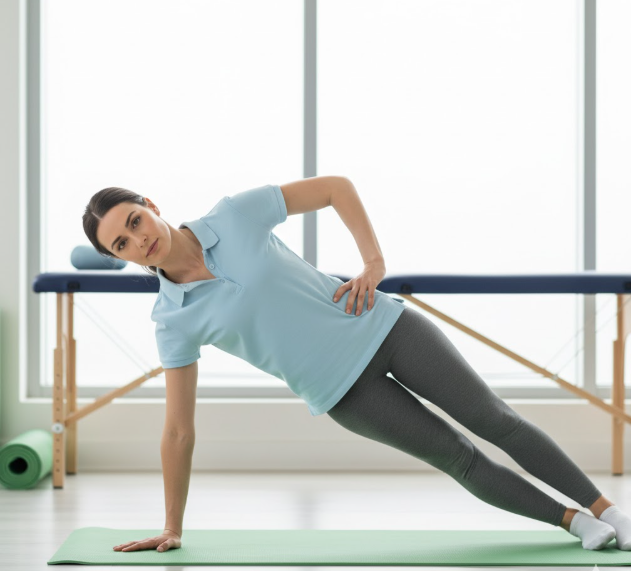
The side plank strengthens your obliques, shoulders, and hip stabilizers — key muscles for preventing lower back pain and maintaining balance.
How to do it:
- Lie on your side with knees bent and elbow under your shoulder.
- Lift your hips so your body forms a straight line from shoulders to knees.
- Hold for 20–30 seconds, then switch sides.
Tip: Keep your shoulders and hips stacked — don’t lean forward or backward.
Benefits: Improves side stability, reduces back strain, enhances posture control.