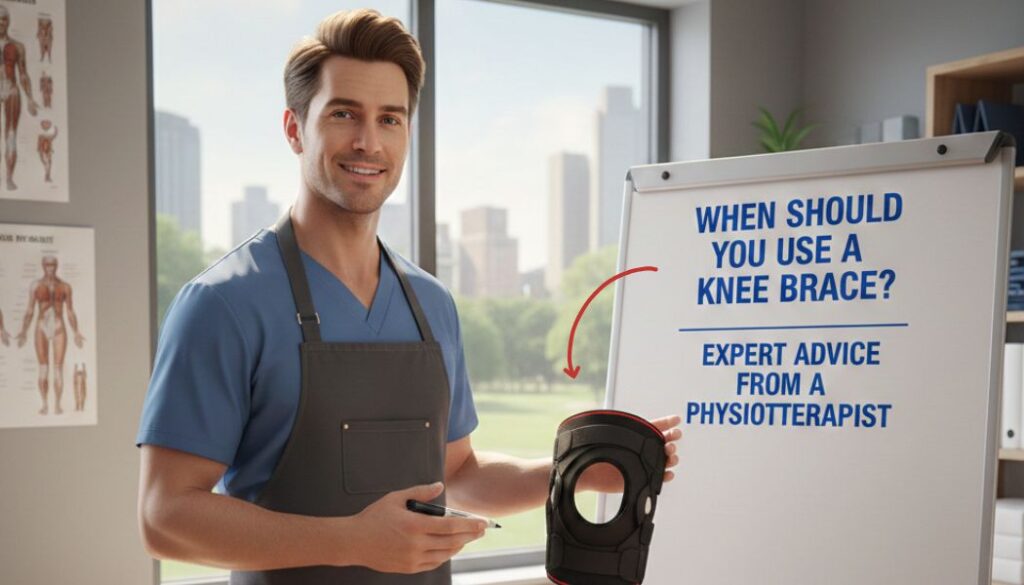
If you’ve ever felt that sharp twinge while climbing stairs or a dull ache after a morning run, you’ve likely stared at the wall of neoprene sleeves and hinged contraptions at the local pharmacy and wondered: Do knee braces actually work?
As a physiotherapist, this is one of the most common questions I get. Patients often walk into the clinic sporting a brace they bought online, hoping it’s the “magic fix” for their discomfort. The truth is, while a knee brace can be a game-changer, using the wrong one—or using one at the wrong time—can sometimes do more harm than good.
Here is the professional breakdown of when to wrap it up and when to let your joints breathe.
The Big Question: Do Knee Braces Work?
The short answer is yes, but not in the way most people think. A brace isn’t a replacement for strong muscles or flexible tendons. Instead, knee braces work through three primary mechanisms:
- Structural Support: They physically limit movements that could further damage a ligament (like preventing the knee from buckling inward).
- Compression: This helps manage swelling and provides a “hug” to the joint, which can reduce the perception of pain.
- Proprioception: This is a fancy way of saying “body awareness.” The feeling of the fabric against your skin sends signals to your brain, making you more mindful of how you’re moving your leg.
When You Should Reach for a Brace
1. Post-Injury Stabilization
If you’ve just suffered a Grade II or III ligament tear (like an ACL or MCL injury), your knee is structurally unstable. In this phase, a hinged knee brace is non-negotiable. It acts as an external skeleton, protecting the healing tissue from lateral movements that could cause a re-tear.
2. Managing Osteoarthritis (OA)
For those dealing with “wear and tear,” an unloader brace is often the best knee brace for pain. These are specifically engineered to shift pressure from the damaged side of the knee joint to the healthier side. It can be the difference between staying sedentary and enjoying a 30-minute walk.
3. Post-Operative Recovery
After surgery, your surgeon will likely prescribe a specific brace to limit your range of motion. This ensures you don’t accidentally straighten or bend your knee further than the surgical repair can handle.
4. The “Mental Safety Net” for Sports
If you are returning to a high-impact sport (like basketball or skiing) after an injury, a sleeve can provide the psychological confidence needed to move at full speed again.
Selecting the Right Tool: Which One Do You Need?
Not all braces are created equal. Choosing the wrong one is like wearing hiking boots to a swim meet—it’s just not going to help.
| Type of Brace | Best For… | How it Works |
| Compression Sleeve | Minor swelling, mild tendonitis, “achy” knees. | Improves blood flow and body awareness. |
| Patellar Stabilizer | Kneecap tracking issues (Runner’s Knee). | A cutout or “donut” keeps the kneecap in its groove. |
| Hinged Brace | Ligament tears (ACL/MCL), post-surgery. | Rigid side bars prevent the knee from wobbling. |
| Unloader Brace | Severe Osteoarthritis. | Redistributes weight to the healthy side of the joint. |
The Hidden Risks: Why You Shouldn’t Wear One 24/7
While they offer great support, there is a “dark side” to over-bracing. As a physio, my goal is to eventually get you out of the brace.
- Muscle Atrophy: If the brace does all the work, your quadriceps and hamstrings might decide to take a permanent vacation. Weak muscles lead to more joint pressure in the long run.
- False Sense of Security: Sometimes a brace makes you feel too good. You might push yourself to run a 10k before your tissues are actually healed, leading to a more severe injury.
- Skin Irritation: Constant wear can lead to chafing or even dermatitis from the sweat trapped against the neoprene.
The Pro Tip: Don’t Forget the Rehab
If you take away one thing from this article, let it be this: A brace is a bridge, not a destination.
The best knee brace for pain is actually a strong set of glutes and quads. If you’re using a brace to “get through” the day, you should also be performing targeted strengthening exercises. Think of the brace as your training wheels—they help you stay upright while you’re learning (or relearning) how to balance, but the goal is to ride solo.
Final Verdict
You should use a knee brace if you have an acute injury, a diagnosed structural instability, or significant arthritis that prevents daily activity. However, if your knee just feels “a bit weird,” you might be better off with a consultation and a dedicated exercise plan.
Before you buy: Consult with a healthcare professional to ensure you aren’t masking a problem that requires more than just a piece of fabric to fix.