Sciatica Relief at Home: A Physiotherapist’s Step-by-Step Guide
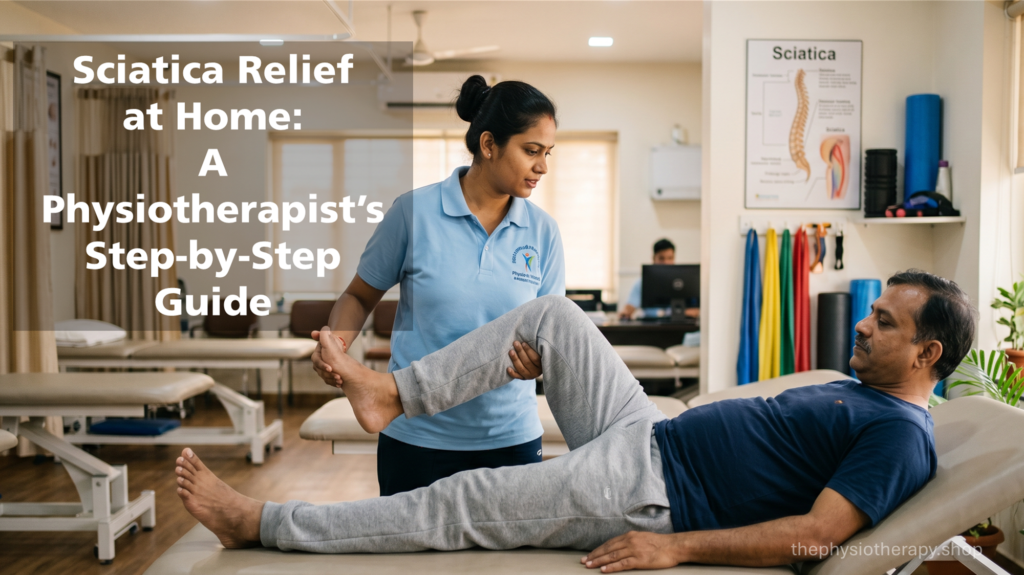
Sciatica can turn simple daily movements—like sitting, walking, or bending—into painful challenges. If you’re searching for sciatica relief exercises at home or wondering how to relieve sciatica fast, this guide will walk you through safe, physiotherapist-approved steps you can start today.
What Is Sciatica?
Sciatica isn’t a condition itself—it’s a symptom caused by irritation or compression of the sciatic nerve, the longest nerve in your body. It typically leads to pain that radiates from your lower back down one leg, sometimes reaching the foot.
Common symptoms:
- Sharp or burning pain in the lower back or leg
- Tingling or numbness
- Muscle weakness
- Pain that worsens while sitting
The most common causes include herniated discs, spinal stenosis, or prolonged poor posture.
Step 1: Reduce Pain and Inflammation First
Before jumping into exercises, your first goal should be calming the irritated nerve.
What to do:
- Cold therapy (first 48 hours): Apply an ice pack for 15–20 minutes
- Heat therapy (after 48 hours): Use a heating pad to relax muscles
- Avoid prolonged sitting: Take breaks every 30–45 minutes
- Sleep posture: Lie on your side with a pillow between your knees
These simple steps can significantly reduce nerve irritation and prepare your body for movement.
Step 2: Start Gentle Sciatica Relief Exercises at Home
Once your pain is manageable, begin gentle movements to release nerve pressure. Perform these exercises slowly and stop if pain worsens.
1. Knee-to-Chest Stretch


6
How to do it:
- Lie on your back
- Pull one knee toward your chest
- Hold for 20–30 seconds
- Switch legs
Benefit: Relieves lower back tension and reduces nerve compression.
2. Piriformis Stretch


7
How to do it:
- Lie on your back
- Cross one ankle over the opposite knee
- Pull the supporting thigh toward your chest
Benefit: Loosens the piriformis muscle, a common cause of sciatic nerve irritation.
3. Cat-Cow Stretch


7
How to do it:
- Start on hands and knees
- Arch your back upward (cat)
- Then dip it downward (cow)
- Repeat slowly
Benefit: Improves spinal flexibility and reduces stiffness.
4. Standing Hamstring Stretch


6
How to do it:
- Place one leg on a chair
- Keep your back straight
- Lean forward slightly
Benefit: Reduces tension in the back of the leg, easing nerve pull.
Step 3: Strengthen to Prevent Recurrence
Once pain improves, strengthening exercises are crucial to prevent sciatica from returning.
Focus on:
- Core muscles (planks, pelvic tilts)
- Glutes (bridges)
- Lower back support muscles
Strong muscles help stabilize your spine and reduce pressure on the sciatic nerve.
Step 4: Fix Daily Habits That Trigger Sciatica
You can’t out-exercise bad habits. Long-term relief depends on correcting daily routines.
Key changes:
- Sit with proper lumbar support
- Keep feet flat on the floor
- Avoid slouching
- Use ergonomic chairs if possible
- Lift objects with your legs, not your back
Even small posture improvements can make a big difference.
Step 5: How to Relieve Sciatica Fast (Quick Tips)
If you’re in acute pain and need fast relief, combine these strategies:
- Alternate ice and heat therapy
- Perform gentle stretches every few hours
- Walk for 5–10 minutes instead of sitting
- Stay hydrated (helps tissue recovery)
- Avoid sudden twisting or heavy lifting
Important: Bed rest is not recommended. Light movement actually speeds up recovery.
When to See a Physiotherapist or Doctor
Home treatment works for most mild to moderate cases, but seek professional help if:
- Pain lasts more than 2–3 weeks
- You experience severe weakness
- There’s loss of bladder or bowel control (medical emergency)
- Pain becomes unbearable
A physiotherapist can design a personalized rehab plan tailored to your condition.
Pro Tip: Consistency Beats Intensity
Many people expect instant relief, but sciatica recovery is about consistency—not pushing hard.
- Do exercises daily
- Progress gradually
- Listen to your body
Rushing or overexerting can worsen symptoms.
Final Thoughts
Sciatica can be painful, but the good news is that most cases improve with the right home care. By combining pain management, targeted sciatica relief exercises at home, and posture correction, you can significantly reduce symptoms and prevent recurrence.
If you stick to this step-by-step physiotherapy approach, you’ll not only learn how to relieve sciatica fast, but also how to keep it from coming back.