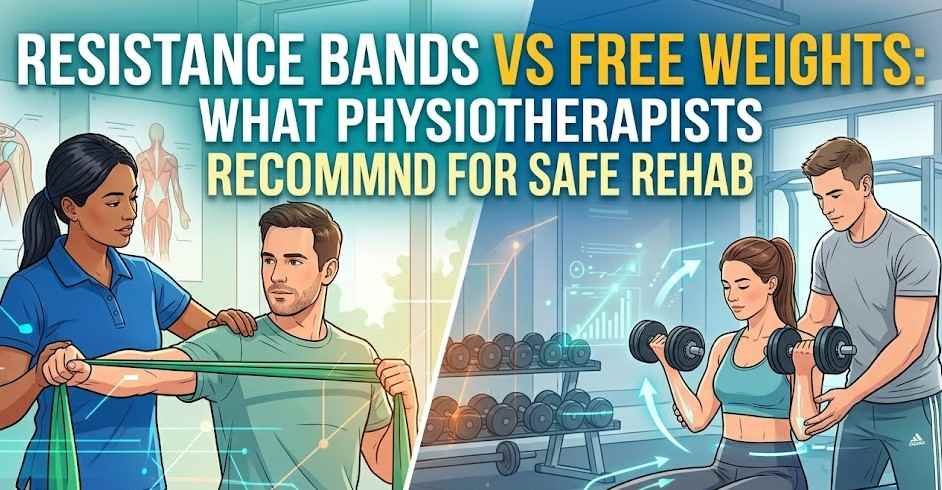
Recovering from an injury often raises an important question: Should you use resistance bands or free weights for rehabilitation? Many people assume that lifting heavier weights leads to faster recovery, while others believe resistance bands are only for beginners. The truth is that both tools have unique benefits, and physiotherapists often use them strategically depending on the patient’s condition, recovery stage, and rehabilitation goals.
Whether you’re recovering from a knee injury, shoulder pain, back pain, surgery, or simply trying to regain strength safely at home, understanding the differences between resistance bands and free weights can help you make better decisions.
In this article, we’ll explore how each option works, their advantages and limitations, and what physiotherapists typically recommend for safe and effective rehabilitation.
Understanding Resistance Bands
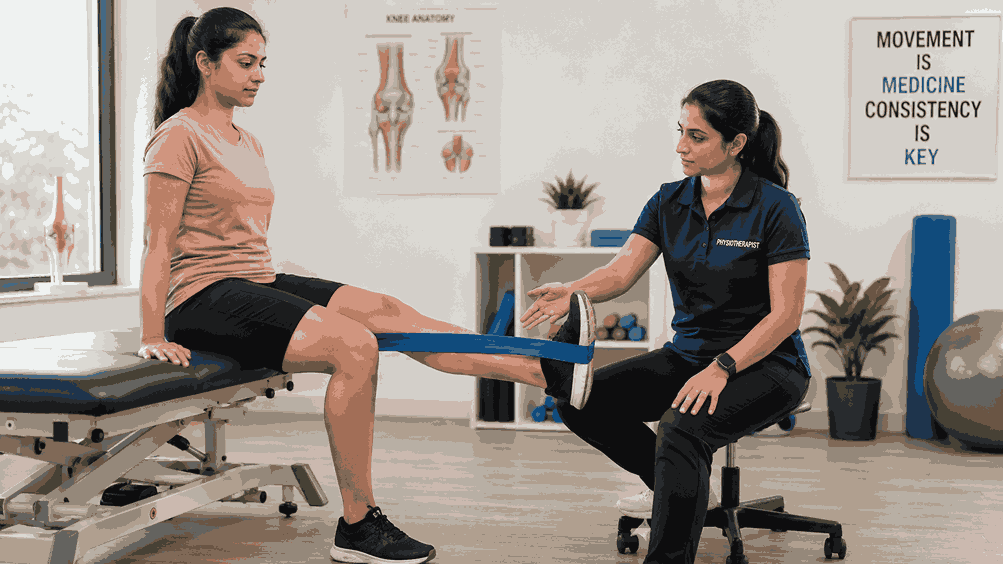
Resistance bands are elastic exercise tools that create tension when stretched. They come in various resistance levels, ranging from light to extra heavy, and can be used for strengthening, mobility, balance, and flexibility exercises.
Unlike traditional weights, resistance bands provide variable resistance, meaning the tension increases as the band stretches further.
Benefits of Resistance Bands for Rehabilitation
1. Lower Joint Stress
One of the biggest reasons physiotherapists recommend resistance bands during rehabilitation is their ability to strengthen muscles without placing excessive stress on joints.
For individuals recovering from:
- Knee injuries
- Rotator cuff injuries
- Arthritis
- Post-surgical rehabilitation
bands allow gradual strengthening while minimizing discomfort.
2. Better Control of Movement
Bands encourage slow and controlled movements, which helps patients focus on proper exercise technique.
This is especially important during rehabilitation because poor movement patterns can delay recovery or cause reinjury.
3. Portable and Convenient
Resistance bands are lightweight, affordable, and easy to use at home. Patients can continue their prescribed exercises without needing access to a gym.
4. Ideal for Early Rehab Stages
In the early phases of rehabilitation, the goal is often restoring movement, activating muscles, and improving stability rather than lifting heavy loads.
Resistance bands excel in this stage because they allow progressive loading without overwhelming healing tissues.
Understanding Free Weights
Free weights include:
- Dumbbells
- Barbells
- Kettlebells
- Weight plates
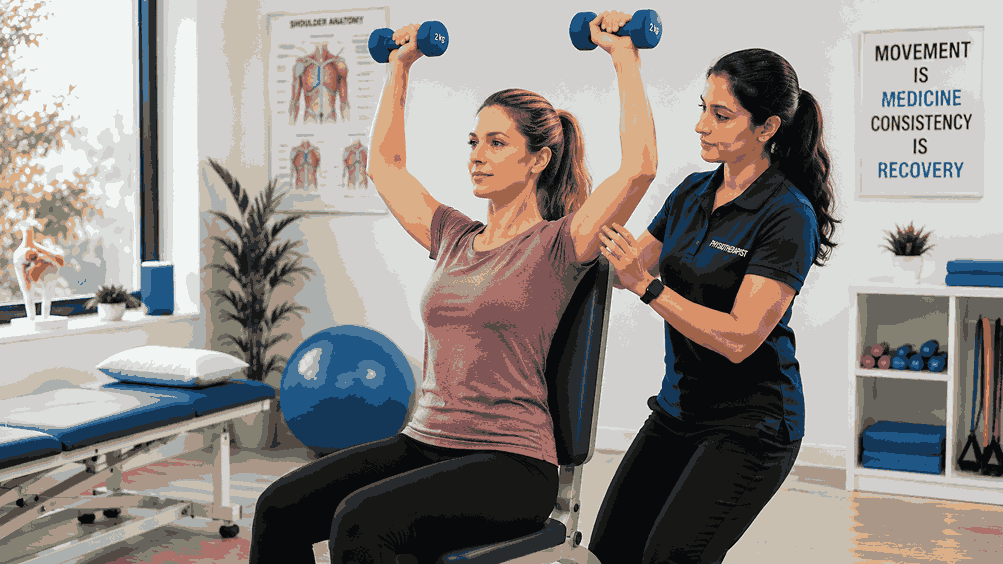
They provide resistance through gravity and are commonly used for building muscle strength, endurance, and functional fitness.
Free weights require the body to stabilize movement throughout the exercise, engaging multiple muscle groups simultaneously.
Benefits of Free Weights in Rehabilitation
1. Greater Strength Development
Once healing progresses, patients need stronger muscles to support daily activities and prevent future injuries.
Free weights are excellent for developing:
- Muscle strength
- Bone density
- Functional movement patterns
- Overall physical performance
2. Functional Movement Training
Exercises such as squats, lunges, and deadlifts closely mimic real-life activities.
This helps patients transition from rehabilitation to normal daily movement more effectively.
3. Progressive Overload
Rehabilitation eventually requires increasing resistance to continue improving strength.
Free weights make it easy to increase load gradually by adding small weight increments.
4. Improved Balance and Coordination
Many free-weight exercises require stabilization, which improves:
- Balance
- Coordination
- Joint control
- Neuromuscular function
These improvements are particularly valuable after injury recovery.
Resistance Bands vs Free Weights: Key Differences
| Feature | Resistance Bands | Free Weights |
|---|---|---|
| Joint Stress | Lower | Moderate to High |
| Portability | Excellent | Limited |
| Cost | Low | Moderate |
| Early Rehab Suitability | Excellent | Limited |
| Advanced Strength Training | Moderate | Excellent |
| Progressive Loading | Moderate | Excellent |
| Home Use | Very Easy | Easy |
| Stability Training | Good | Excellent |
The choice is rarely about one being better than the other. Instead, physiotherapists choose the most appropriate tool based on the patient’s needs.
What Physiotherapists Usually Recommend
Many people expect a simple answer, but physiotherapists rarely choose only one method.
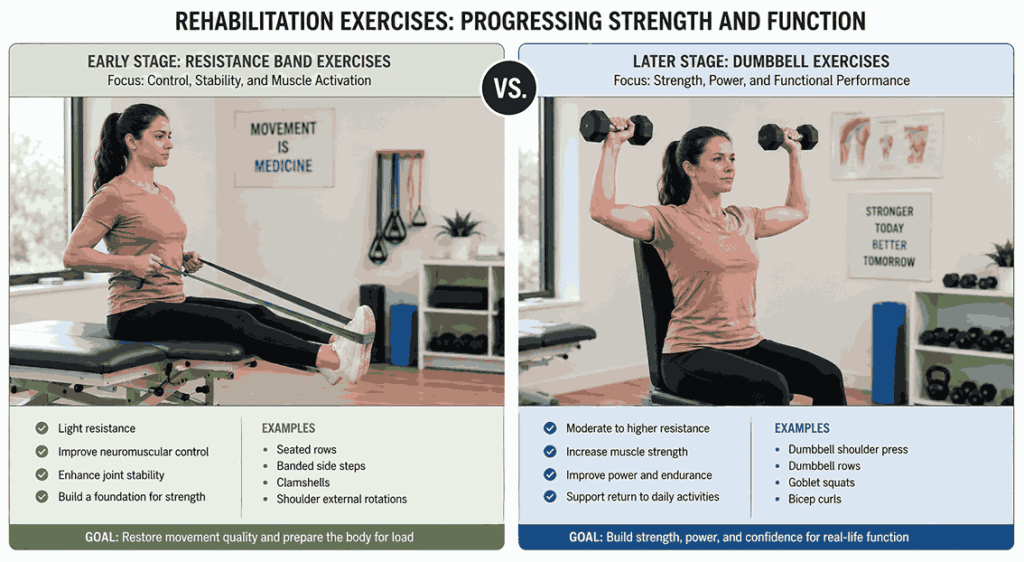
Instead, rehabilitation typically follows a progression:
Phase 1: Pain Reduction and Muscle Activation
During the early stage after injury or surgery, the priority is:
- Reducing pain
- Restoring movement
- Activating weakened muscles
Resistance bands are often preferred because they provide gentle resistance and greater control.
Common examples include:
- Shoulder external rotations
- Hip abduction exercises
- Knee extensions
- Ankle strengthening exercises
Phase 2: Strength Restoration
As tissues heal and pain decreases, exercises become more challenging.
At this stage, physiotherapists may combine:
- Resistance bands
- Light dumbbells
- Bodyweight exercises
This approach helps build foundational strength safely.
Phase 3: Functional Recovery
Once patients regain basic strength, the focus shifts toward preparing for everyday activities.
Free weights become increasingly valuable for:
- Squats
- Lunges
- Step-ups
- Deadlift variations
These exercises mimic real-world movements and improve overall function.
Phase 4: Return to Activity or Sports
Athletes and active individuals usually need higher levels of strength and power before returning to sports.
At this stage, free weights often become the primary training tool while resistance bands remain useful for:
- Warm-ups
- Mobility exercises
- Injury prevention
- Muscle activation
Are Resistance Bands Enough for Rehabilitation?
For many individuals, especially those recovering from mild injuries or looking to improve general fitness, resistance bands can provide excellent results.
They are particularly effective for:
- Home rehabilitation
- Older adults
- Joint-friendly workouts
- Postural correction exercises
- Shoulder rehabilitation
- Knee rehabilitation
However, individuals seeking significant strength gains may eventually require heavier resistance than bands can comfortably provide.
This is why physiotherapists often transition patients toward free weights as recovery progresses.
Are Free Weights Safe During Recovery?
Yes—when used correctly.
The misconception that free weights are dangerous comes from improper use, excessive loading, or poor technique.
Under professional guidance, free weights can be extremely effective for rehabilitation.
Safety considerations include:
- Starting with light loads
- Maintaining proper form
- Avoiding pain during exercise
- Progressing gradually
- Following physiotherapist recommendations
The key is choosing the right weight for your current recovery stage.
Common Mistakes During Rehab Strength Training
Whether using bands or weights, avoid these common mistakes:
Skipping Warm-Ups
Muscles and joints perform better when properly prepared for exercise.
Progressing Too Quickly
Many setbacks occur because patients increase resistance before tissues are fully ready.
Ignoring Pain Signals
Mild muscle fatigue is normal, but sharp pain should never be ignored.
Using Incorrect Technique
Poor exercise form can place unnecessary stress on healing structures.
Inconsistent Exercise Habits
Rehabilitation success depends heavily on consistency rather than intensity.
Which Option Is Better for Home Workouts?
For most people exercising at home, resistance bands are an excellent starting point.
They offer:
- Affordability
- Convenience
- Safety
- Versatility
A complete home rehabilitation program can often be performed using a set of resistance bands and bodyweight exercises.
As strength improves, adding adjustable dumbbells can further enhance progress and help maintain long-term fitness.
Final Verdict: What Do Physiotherapists Recommend?
The answer is not resistance bands or free weights—it is often both.
Physiotherapists commonly recommend:
- Resistance bands for early-stage rehabilitation, muscle activation, mobility training, and safe home workouts.
- Free weights for advanced strength development, functional recovery, and long-term injury prevention.
For most rehabilitation journeys, resistance bands serve as the starting point, while free weights become increasingly important as recovery progresses.
If you’re recovering from an injury, surgery, or chronic pain condition, consult a physiotherapist before starting any exercise program. A personalized rehabilitation plan ensures that exercises match your recovery stage and reduce the risk of setbacks.
By using the right tool at the right time, you can recover safely, rebuild strength, and return confidently to the activities you enjoy.